By Brian Hoop
Most Linnton residents probably did not take notice of a new law meant to modernize and improve wildfire preparedness approved by the Oregon Legislature this past spring that could affect Linnton residents.
Senate Bill 762 addresses the wildland-urban interface or “at-risk communities” near areas that may be affected by wildfires. The bill was a response to the catastrophic fires of 2020. Linnton, due to its proximity to Forest Park, is already a Firewise community helping to educate property owners about how to protect their residences from wildfires.
Senate Bill 762 will provide more than $220 million to help Oregon modernize wildfire preparedness including creating fire-adapted communities, developing safe and effective responses to fires, and increasing the resiliency of Oregon’s landscapes.
Aside from expected rulemaking to improve fire risk mapping, doing more prescribed burns, and clarifying enforcement rules pertaining to forestland, the legislation calls for developing new standards for creating defensible spaces around buildings and using fire-resistant building materials. The bill offers both “carrots and sticks” to encourage broader adoption of measures to prevent wildfires.
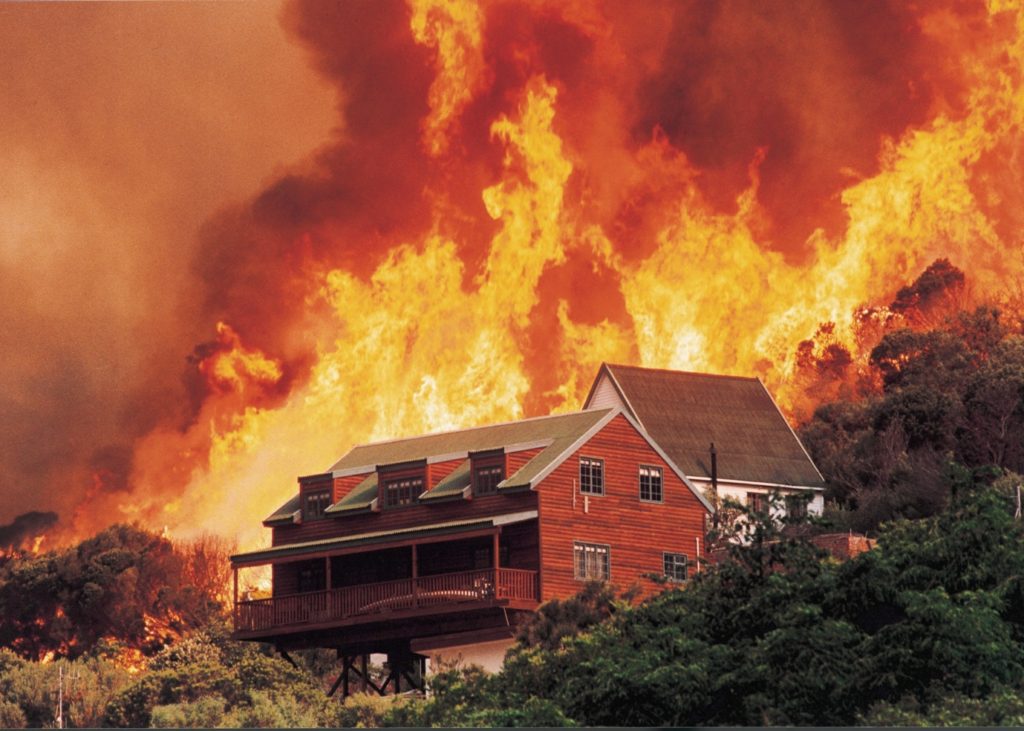
Data shows creating defensible spaces around houses and using fire resistant construction practices makes a difference. Homes that used nonflammable material for roofs have a 70% survival rate for fires; when coupled with just ten meters of clearance of vegetative fuels (defensible space), the survival rate increases to 86%. Structures that are located in or near a Firewise designated community have a lower rate of destruction.
It is the defensible space concept that often raises concern with critics who jump to conclusions with visions of scorched earth removal of all vegetation around their houses.
Though she ultimately voted in favor, Linnton’s Senator, Betsy Johnson, D-Scappoose, raised concern about the limited opportunities for public comment in crafting the bill and advocated for more community engagement through the rule-making process happening this year.
Those specifics are now being considered by a committee under the State Department of Forestry. Areas within the wildland-urban interface will be categorized according to risk classifications and will not face blanket restrictions.
Rep. Jeff Golden, D-Ashland, said that only the “extreme” and “high risk” classes within the wildland-urban interface would face regulation under SB 762. Homes subject to regulation will not face “cookie-cutter” restrictions but would undergo property-specific consultation.
To learn more, go to: https://www.oregon.gov/odf/Pages/sb762.aspx and https://www.oregon.gov/odf/board/pages/rac.aspx.