
By Brian Hoop
Barring legal challenges, Portland residents will consider a sweeping ballot measure to change our city government’s structure this November. Linnton residents will have an opportunity to discuss pros and cons with each other at our Wednesday, September 7 meeting at the Linnton Community Center.
There are three key features of the proposal from the all-volunteer Charter Commission, which is appointed by
City Council and convenes every ten years to consider changes to the city’s governing document – the Charter.
Allowing voters to rank candidates in order of their preference, using ranked choice voting
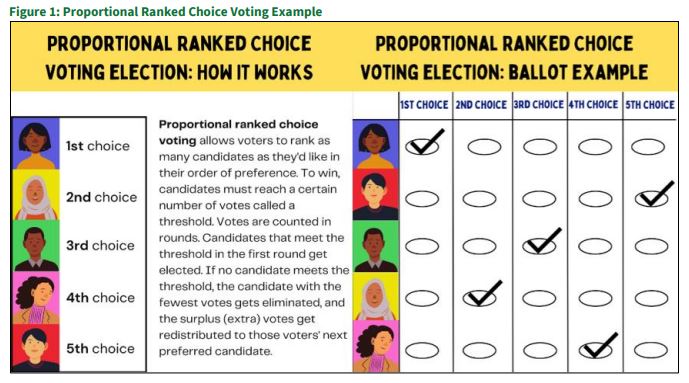
Currently, Portland voters can only pick one candidate when they vote for city elected leaders. Allowing voters to rank candidates in their order of preference using ranked choice voting gives voters more choices to express their true preferences and allows us to elect leaders who represent our communities.
Four new geographic districts with three members elected to represent each district, expanding the city council to a total of 12 members
Right now, Portland has four city commissioners that represent the city as a whole. Creating geographic districts with more than one council member to represent each district will increase accountability between residents and elected leaders. A 12-member city council will help fix the city’s challenges.
A city council that focuses on setting policy and a mayor elected citywide to run the city’s day-to-day operations, with the help of a professional city administrator
In the current commission form of government, the mayor and city commissioners directly manage the city’s bureaus. Shifting to a new government structure in which the city council can focus on passing laws and a mayor can help implement them will help create a more responsive government.
Both supporters and opponents of the proposal can probably agree that many Portlanders feel that the city governments’ structure needs change. Supporters argue the changes will increase geographic representation and accountability between elected officials and communities, and ensure voters have more choices to elect candidates that share their values.
Opponents argue the combination of both ranked voting and having three elected councilors for each of the four geographic districts, has never been tested in a large U.S. city before. The Charter Commission argues the entire package needs to be passed together in order to work effectively.
To learn more: portland.gov/omf/charter-review-commission