By Sarah Taylor
We may not be able to see them easily, but each spring thousands of juvenile salmon pass by. Understanding what these endangered guests need is an important step in planning for the river, its watershed, and our shores.
These tiny visitors hatch upstream in places like the Clackamas River and Johnson Creek. When the waters begin to warm, they begin their journey when they are only a finger-length long. Striped silver and gray, they blend into the shadows of the riverbank. Their goal? The estuaries of the Columbia River and on to the Pacific Ocean.
They only need to rest briefly and continue on their way. They require only a cool place to rest, preferably with fresh creek water by the river’s edge and yummy macroinvertebrates to snack on–yummy mayflies, stoneflies, caddisflies, black flies, and riffle beetles. Their idea of perfect décor is a downed log, large rocks, and deciduous trees that drape gracefully over the water creating dappled
shade. Please, they beg, make the water shallow and don’t provide places for fish who want to eat them.
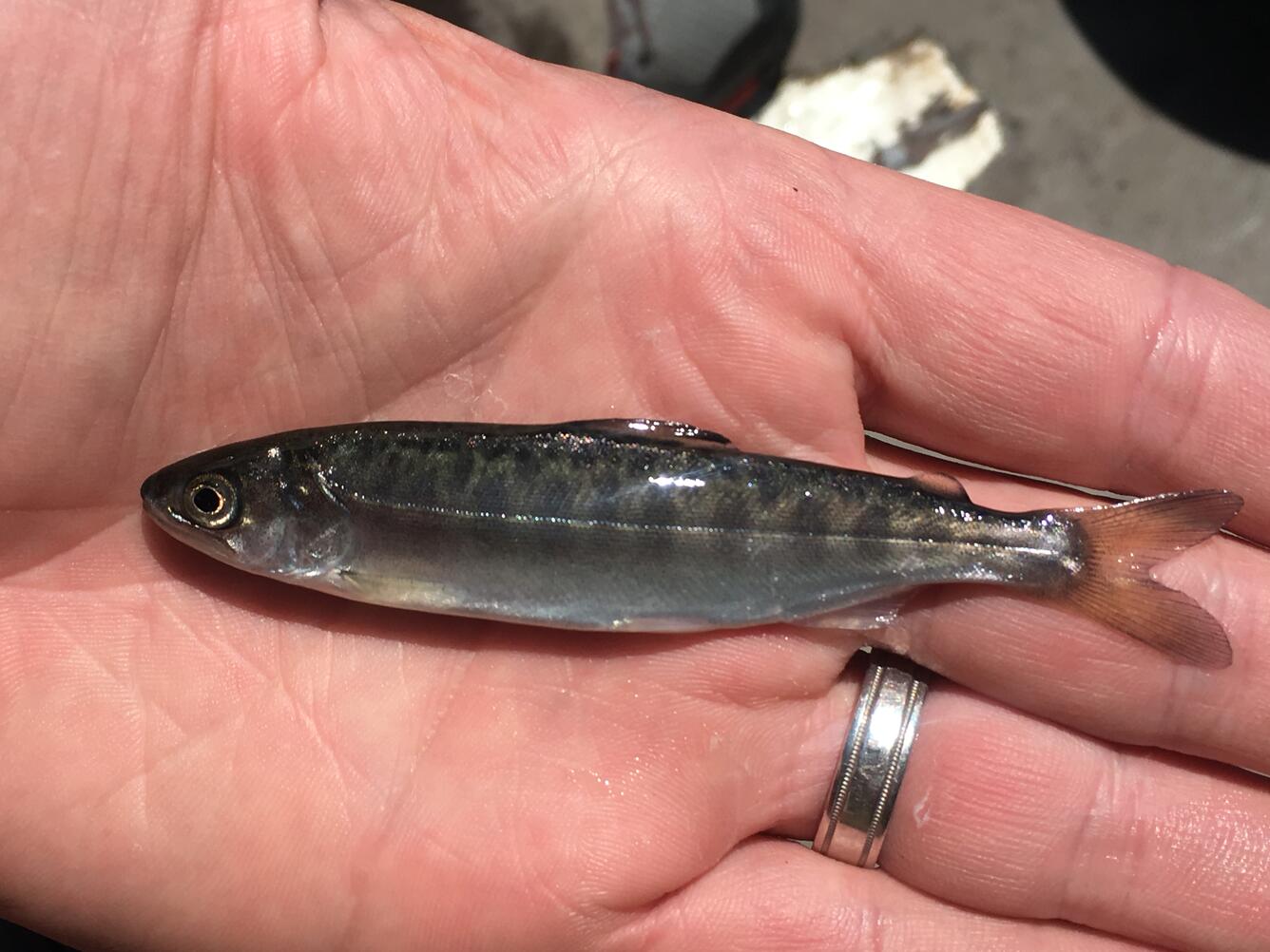
Typical juvenile coho salmon. Photo credit: California Department of Fish and Wildlife.
Our guests prefer to swim or hop on a current when it’s time to be on their way, traveling in the dark. They are grateful when we humans keep the lights off along the river so predators can’t see them pass. If we want them to feel welcome and to return in a few years, they suggest we keep the banks gently sloping, take down old docks, let the creeks run naturally into the river, and plant riverside plants.
Our tiny friends are not just traveling but are memorizing the smells of Linnton and the entire route from their birthplace to the ocean. Disrupting these smells with oil spills and dredging are confusing. They like our smell, just as it is.
Juvenile salmon are on a mission and may travel up to 50 kilometers a day. That’s like running a marathon. As we consider the future of our riverside, it helps to ask the question. “What would salmon want?” One thing we can be sure of – if it’s good for salmon, it’s probably good for our health and safety as well.
Not long ago Indigenous Tribes had villages along the Willamette, Columbia, and Willamette Channel and salmon were plentiful. You could say they knew how to make salmon welcome. In the coming decade, Portland will have the opportunity to make the shores of the lower Willamette a place where salmon thrive. As we do, we will find ourselves with cleaner air and healthier lives.