
By Ryan Kennelly
A couple weeks ago, I had an alarming experience which gave me some understanding and perspective about emergencies in our neighborhood. While sitting on our deck, I saw smoke rising between us and the river, and from where we live in Springville, the smoke looked as though it was coming from the trains by the tanks in the Tank Farms.
I immediately called for my wife and child and got them in the car to exit from any potentially lethal and catastrophic scenario. The tanks in front of our neighborhood are filled with diesel fuel, and any train or car/truck fire would have direct implications on the security of the tanks. Fortunately, when we drove to the bottom of the hill, we could see it was a car, fully immersed in flames at the base of Germantown Road.
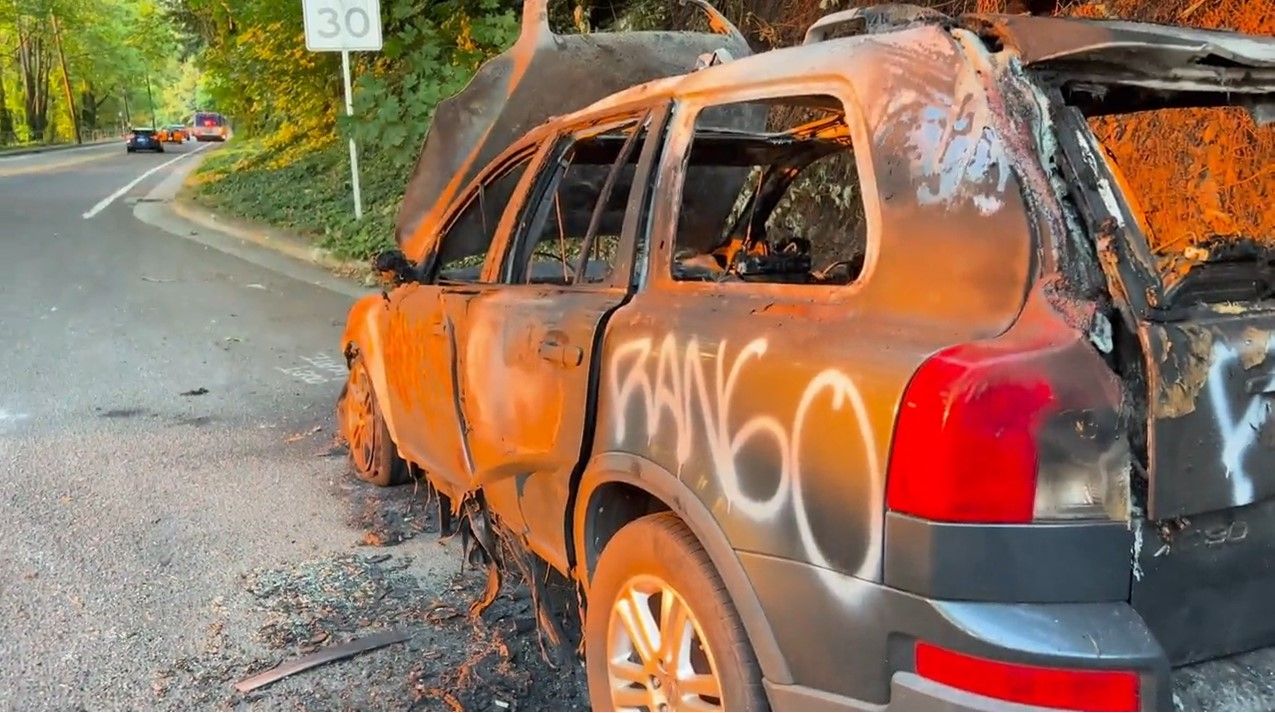
The St Johns Fire Department responded quickly. They contained the car fire, which was consumed by flames–you can still see where it scorched the surrounding trees and bushes at the base of Germantown Road and Bridge St.
This incident got me thinking about how our family responded and how little time we had to evacuate a frightening scenario. I thought of our neighbors and our obligation to try to warn them when there is an emergency, even before the emergency responders can post it online.
I encourage everyone to create a group text thread for your neighborhood for such situations. It’s advantageous to get every person’s contact in each household on the group text and then “pin” it to the top of your text threads, so it’s easily accessible. Make sure to ask everyone’s permission to start a thread before sharing their information, and possibly lay down ground rules for texting (“emergencies only”, or “keep replies that don’t apply to the group to a private text”). In many cases, this may be the fastest and most efficient way of helping others in your neighborhood in case of an emergency!
To save time in an emergency when you may not be
thinking clearly:
• Identify multiple evacuation routes from home, work or school.
• Determine a family meeting place outside of the hazard area.
• Designate an out-of-area person to contact if you become separated.
• Plan for pets.
• Discuss the plan with your household, loved ones, friends and neighbors.