By Jane Hartline & Shawn Looney
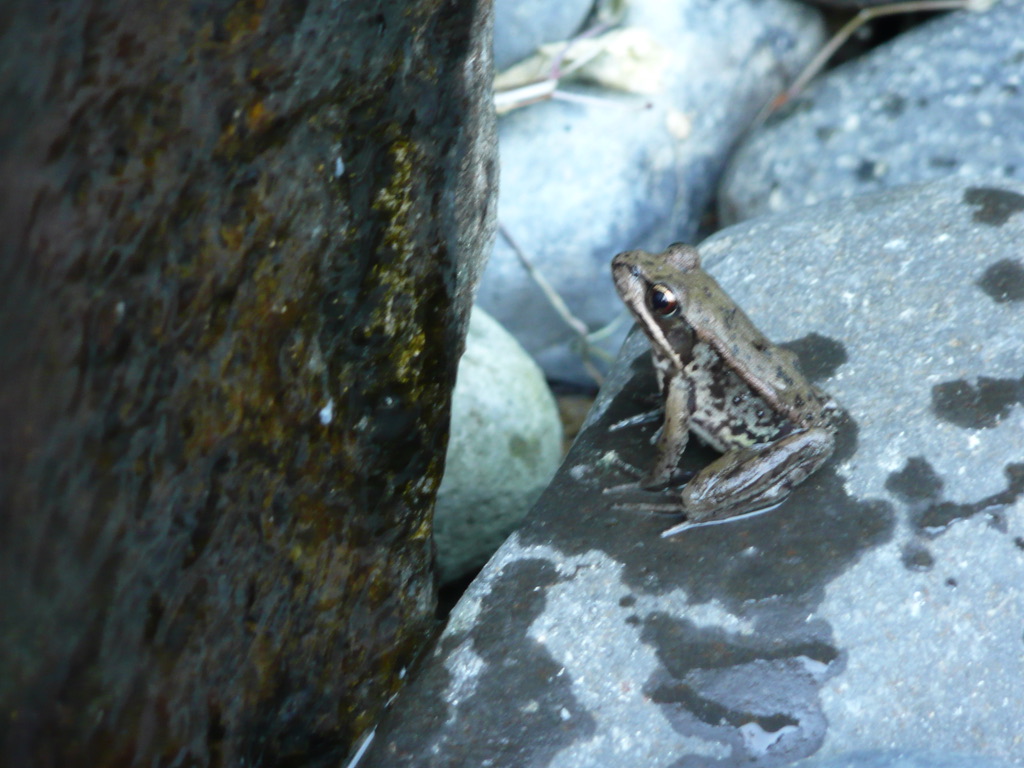
It’s that time of year when the red-legged frogs migrate from Forest Park to the Harborton Wetland. For nine seasons now, teams of volunteers have been on call nightly for those nights when it’s above 45° and damp or raining, between about mid-December and mid-April.
To keep them from being killed when crossing busy St. Helens Road, volunteers intercept the frogs along Harborton Drive, place them in buckets and drive them down to Marina Way, where they are released just above the wetland. After their eggs have been laid, the frogs are assisted back to the forest. Records for the migration are 682 transported on a single night and more than 2,000 assisted in a single season.
There’s a new glimmer of hope for the frogs and their faithful volunteer assistants this year. The US Fish and Wildlife Service, Oregon Department of Fish and Wildlife, Oregon Wildlife Foundation and others are collaborating on a feasibility study to determine whether an underpass could be built under St. Helens Road for safe frog passage. The team working on the feasibility study includes biologists, hydrologists, engineers, and tunnel-drilling specialists, and the study could take months. When it is finished, we’ll have a preliminary design for the project. The study was financed by the Oregon Conservation Fund, Oregon Watershed Enhancement Board and US Fish and Wildlife Service.
In the meantime, consider driving more slowly on warmer rainy nights along that stretch of the highway when frogs may be trying to cross.