By Justine Aylmer
On September 9th, RestorCap wetlands ecologist Kari Dupler led a guided walk through the Linnton Mill restoration area, sharing information about the project history and progress. To restore the land, several hundred thousand cubic yards of soil were excavated and moved, restoring the area to the low-lying flood plain it would have been pre-colonization. During excavation, soil in two small sites was found to contain PCBs exceeding Portland Harbor limits – that dirt was buried deep under the new hill and covered in concrete to prevent any exposure in the future.
The wetlands area provides numerous benefits for the local ecosystem. A variety of native plants were brought in to the area, including Cottonwoods, Alders, Wapato and Camas bulbs, Sweetgrass, and two different species of cattails. These plants are at various stages of growth and thrive at different micro-elevations in the wetlands, ranging from 8 to 13 feet. This diversity in trees and vegetation brings different kinds of insects, which in turn feed fish like the juvenile salmon that use the off-channel habitat to rest when the Willamette current is strong and the water level is high. These fish serve as food for various bird species, including a pair of nesting bald eagles from Forest Park which have been seen foraging and catching fish here along with one of their young.
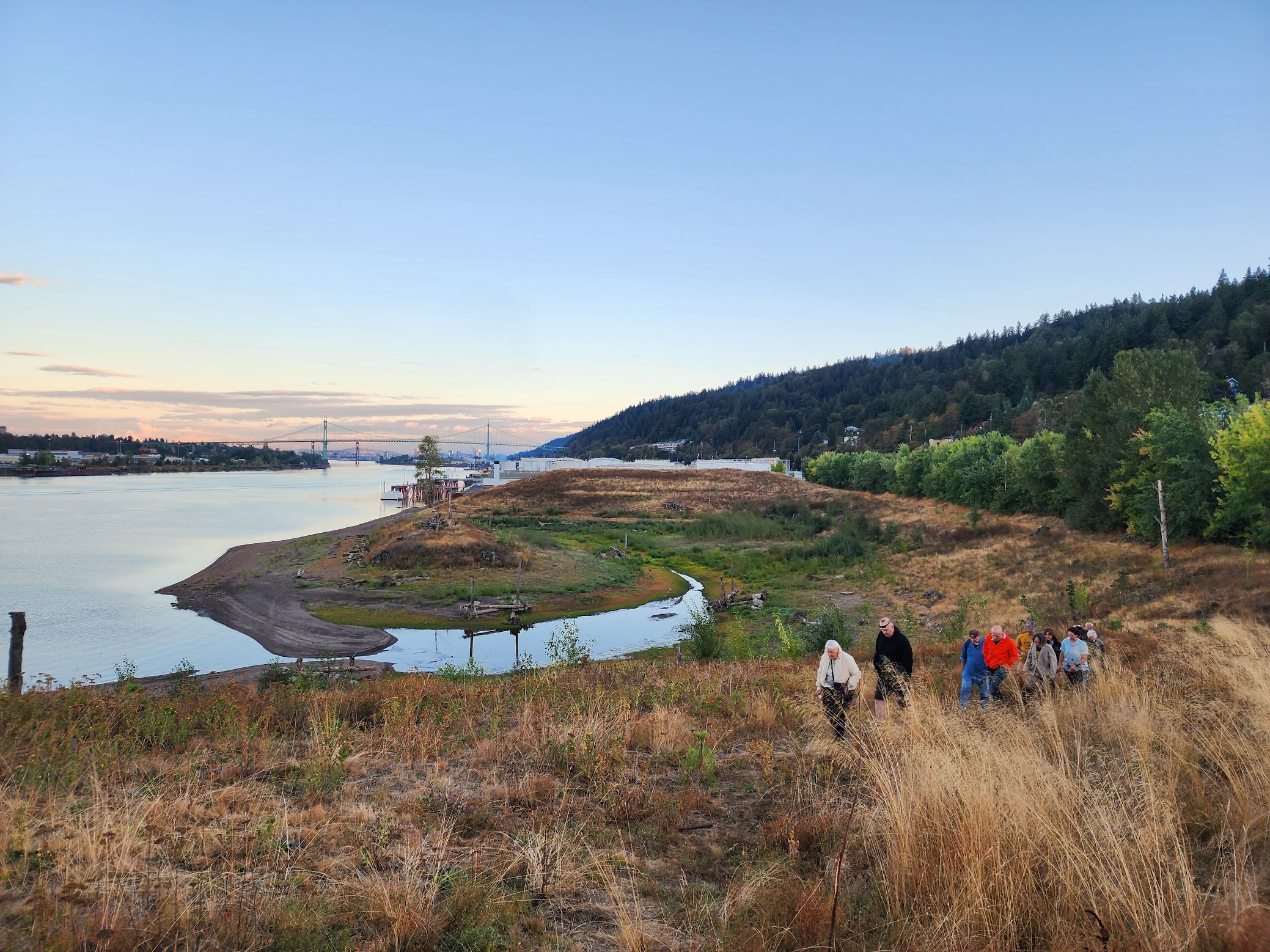
Other animals observed in the area include river otters, a long-tailed weasel, deer, coyotes, ducks, osprey, a long list of other birds, and beavers – one of which was observed during the walk swimming in the river in spite of how rare it is to spot them in the wild.
The representatives from RestorCap indicated that they plan to host walks like this several times a year. Efforts will be made to ensure these walks are publicized to the Linnton community. The area is otherwise off-limits to the public.